


Widescreen Worldwide |
Read more at in70mm.com The 70mm Newsletter |
| Written by: Indiana University Press | Date: 16.12.2010 |
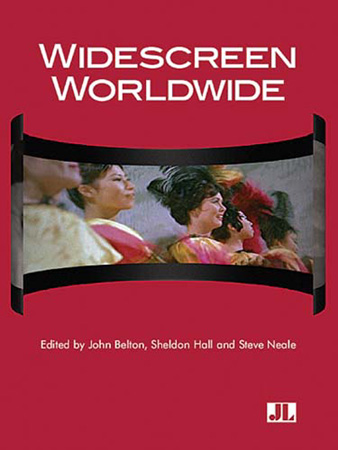 Widescreen
Worldwide Widescreen
WorldwideEdited by John Belton, Sheldon Hall, and Steven Neale cloth $34.95 Widescreen technology’s impact on film aesthetics Examining widescreen cinema as a worldwide aesthetic and industrial phenomenon, the essays in this volume situate the individual expressions of this new technology within the larger cultural and industrial practices that inform them. What Hollywood sought to market globally as CinemaScope, SuperScope, Techniscope, Technirama, and Panavision took indigenous form in a host of compatible anamorphic formats developed around the world. The book documents how the aesthetics of the first wave of American widescreen films underwent revision in Europe and Asia as filmmakers brought their own idiolect to the language of widescreen mise-en-scène, editing, and sound practices. The work of Otto Preminger, Anthony Mann, Samuel Fuller, Sam Peckinpah, Seijun Suzuki, Kihachi Okamoto, and Tai Kato, among others, is addressed. John Belton is Professor of English and Film at Rutgers University and author of Widescreen Cinema. Sheldon Hall is Senior Lecturer in Stage and Screen at Sheffield Hallam University, United Kingdom. Steven Neale is Professor of Film Studies at Exeter University. |
More in 70mm reading: Letterboxed: The Evolution of Widescreen Cinema Introduction to "Khartoum" The 2004 Oslo 70mm Film Festival The Rivoli Theatre Internet link: Indiana University Press |
Table of Contents | |
|
I. Introduction II. History, Technology and Innovation 1. John Belton, “Fox and 50mm Film” 2. Tom Vincent, “Standing Tall and Wide: The Selling of VistaVision” 3. Paul McDonald, “Hollywood: the IMAX Experience” III. Textual Analysis, Aesthetics and Film Form 5. Lisa Dombrowski, “Cheap but Wide: The Stylistic Exploitation of CinemaScope Aesthetics in Black-and White Low-Budget American Films” 6. John Gibbs and Douglas Pye, “Preminger and Peckinpah: Seeing and Shaping Widescreen Worlds” 7. Steve Neale, “The Art of the Palpable: Composition and Staging in the Widescreen Films of Anthony Mann” IV. Themes and Formats 8. Sheldon Hall, “Alternative Versions in the Early Years of CinemaScope” 9. Kathrina Glitre, “Conspicuous Consumption: The Spectacle of Widescreen Comedy in the Populuxe Era” V. Widescreen Worldwide 10. Steve Chibnall, “The Scope of Their Ambition: British Independent Film Production and Widescreen Formats in the 1950s” 11. Federico Vitella, “Before Techniscope: The Penetration of Foreign Widescreen Technology in Italy, 1953–59” 12. Eric Crosby, “Widescreen Composition and Transnational Influence: The Problem of Early Anamorphic Filmmaking in Japan” 13. David Bordwell, “Another Shaw Production: Anamorphic Adventures in Hong Kong” | |
| Go: back - top - back issues - news index Updated 21-01-24 |