


Compact Distribution Print by Todd-AO | Read more at in70mm.com The 70mm Newsletter | ||||||||||||||||||||||||||||||||||||
| Written by: Dr Richard Vetter, Todd-AO | Date: 01.01.2020 | ||||||||||||||||||||||||||||||||||||
 Some misleading information has appeared recently in film industry publications that concerns the Compact Distribution Print, or CDP. Unfortunately, the quoted sources have not seen CDP demonstrations, so the opinions expressed are speculation and have no factual basis. The purpose of this brief article is to state the facts and set the record straight. CDP has been demonstrated widely, in split-screen comparison, to studio executives, the creative community, and projection and audio members of SMPTE. A leading independent testing laboratory evaluated CDP picture and sound performance in July 1996.
A summary of the 21-page Evaluation Report appears here below this text. Fact: All of the original print-negative information reaches the screen via the compact print process, and picture and sound performance meets or exceeds current SMPTE standards. | More in 70mm reading: Dr. Richard Vetter about ClearVision 2000 Dan Leimeter: Working at Todd-AO Sound Studios CineSpace 70 / ClearVision 2000 by Todd-AO TODD-AO PROCESS • Films | Premiere • People | Equipment • Library | Cinemas • Distortion Correcting • DP70 / AAII Projector • Todd-AO Time Line • Who developed Todd-AO in70mm.com News Peripheral Vision, Scopes, Dimensions and Panoramas in70mm.com's Library Presented on the big screen in 7OMM 7OMM and Cinema Across the World Now showing in 70mm in a theatre near you! 70mm Retro - Festivals and Screenings | ||||||||||||||||||||||||||||||||||||
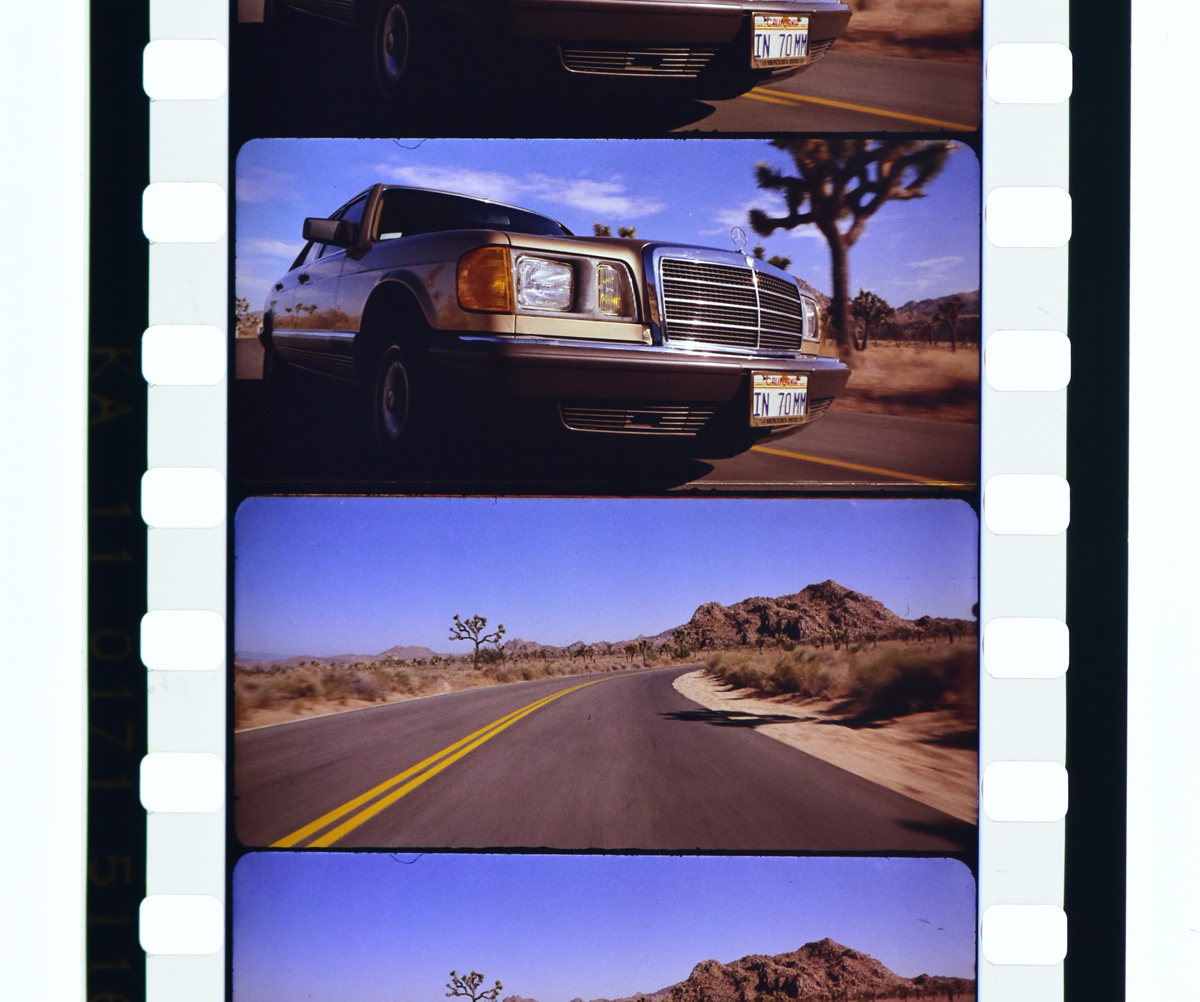 Example of 2½ perf CDP frames, 65mm reduction from Cinespace 70 demo film 2. A compact sound negative is made from the completed sound master. Fact: Sound negative film stock has the capacity to resolve greater than 20 kHz, although the standard in theatre reproduction is 12.5 kHz. Fact: Frequency response of CDP extends from 31.5 Hz to 12.5 kHz, again as confirmed by independent lab tests. The compact print demonstrates both analog and digital sound in accordance with SMPTE audio performance standards. 3. A standard projector is equipped with a new retrofit. permitting projection of current and compact prints. Fact: Once the retrofit is made, a projection attendant can convert from one mode of operation to the other in less than 20 minutes. Fact: With CDP, picture steadiness is improved and print life is extended due to the physical dynamics of 56 ft./min. vs. the current 90 ft./min. COST OF IMPLEMENTATION Although a final draft of the CDP Business Plan is pending, it appears that cost of implementation in North America will be recouped within the third quarter of the first year of majority use of the compact print process. According to the present business plan, it is not contemplated that exhibitors will be required to make any investment. CDP AT 30 FRAMES PER SECOND Fact: The superiority of a frame rate of 30 per second has been demonstrated for decades, yet the film industry has been reluctant to financially embrace it as a new standard
| |||||||||||||||||||||||||||||||||||||
 Example of 2½ perf CDP frames Fact: At 30 fps, flicker is eliminated and motion, definition and brightness are substantially enhanced. It is proposed that CDP can serve as the catalyst for adopting the higher frame rate. Fact: At 30 fps, a compact print is 22 percent shorter than a current print at 24 fps. Presentation of movies at the elevated frame rate will favorably affect boxoffice revenue and patron satisfaction. CONCLUSION CDP has passed all technical tests and has been awarded numerous U.S. and foreign pa-tents based on novelty and utility. CDP supports the survival of film over an electronic alternative. Although CDP has developed a new lamp condenser lens system for large auditoriums, it does not replace the need for 70mm prints in ultra-largescreen venues. Wider distribution and superior presentation coupled with improved economy are what CDP offers the film industry today. Historically, there has always been a resistance to change. But the music industry discovered ways to progress from 78 rpm records to CDs, and magnetic tape recording has shrunk from 30 ips to 3 3/4 ips and less. Motion picture film speed has remained, unchanged, at 90 ft./min. for more than 60 years, and the four-perforation format dates to 1889! These standards have clearly outlived their usefulness. We at United Artists Theatres and Todd-AO believe it's time for a change for the common good of the film industry and its valued patrons. Located in Pacific Palisades, Calif., Dr. Vetter is director of research and development for United Artists Theatre Circuit and Todd-AO. During his 45-year industry career, he has invented Dimension 150 (a 70mm widescreen process), Todd-AO's 35mm anamorphic widescreen process (for which the Academy of Motion Picture Arts and Sciences awarded him a 1973 technical achievement award), and the Prismalite outdoor screen system. Dr. Vetter, who is the inventor and patent holder for CDP, has also been involved in the development of a xenon projection illumination system and various film systems like StereoSpace 3-D, CineMax 70 and CineCircle 360. | |||||||||||||||||||||||||||||||||||||
An Independent U.S. Testing Laboratory | |||||||||||||||||||||||||||||||||||||
| |||||||||||||||||||||||||||||||||||||
CDP Flyer | |||||||||||||||||||||||||||||||||||||
 Flyer | |||||||||||||||||||||||||||||||||||||
 Flyer | |||||||||||||||||||||||||||||||||||||
 • Go to Compact Distribution Print by Todd-AO | |||||||||||||||||||||||||||||||||||||
| Go: back - top - back issues - news index Updated 23-11-26 |